GLP-1s and Muscle Loss: What to Know

GLP-1 medications can drive rapid weight loss, but without the right system, muscle, strength, and energy can suffer. Here’s what the evidence shows.

Learn More
PAIR YOUR MEDICATION WITH A SYSTEM

GLP-1s work. But how you use them matters.

Medications like semaglutide (Ozempic) and tirzepatide (Mounjaro, Zepbound) can be powerful tools for weight loss. But appetite suppression, rapid weight change, and under-fueling can carry unintended consequences, especially for people who care about strength, energy, and long-term health.

Why Eternal created an in-person GLP-1 program

The Eternal GLP-1 Monitoring Program was built by an interdisciplinary team spanning obesity medicine, nutrition, exercise physiology, and performance, designed to ensure GLP-1 use improves health without sacrificing muscle, strength, or long-term resilience.

This program reflects how we practice medicine at Eternal. Coordinated. Data-informed. Grounded in physiology.

Our role is to ensure that while body weight changes, muscle, strength, recovery, and long-term health are protected.

Do GLP-1s cause muscle loss?

They can, but muscle loss is not inevitable.

GLP-1s reduce appetite and slow gastric emptying. For many people, that leads to a large drop in calories and protein intake. When weight loss happens quickly and energy intake is too low, the body may break down lean tissue along with fat.

Clinical and sports-nutrition data show that without enough protein, resistance training, and monitoring, a meaningful portion of weight lost can come from muscle rather than fat.

Who is most at risk?

You’re more likely to lose muscle on a GLP-1 if:
  • You’re losing weight rapidly
  • You’re eating much less protein than before
  • You’ve reduced or stopped strength training
  • You feel persistently fatigued or weaker in workouts
  • You rely on the scale alone to measure progress
This risk is higher for active people and athletes, whose energy and protein needs are already elevated.

Weight loss ≠ fat loss

The scale cannot tell you:

  • How much fat vs muscle you’re losing
  • If strength is being preserved
  • If metabolic health is improving or declining
  • if bone density is becoming compromised

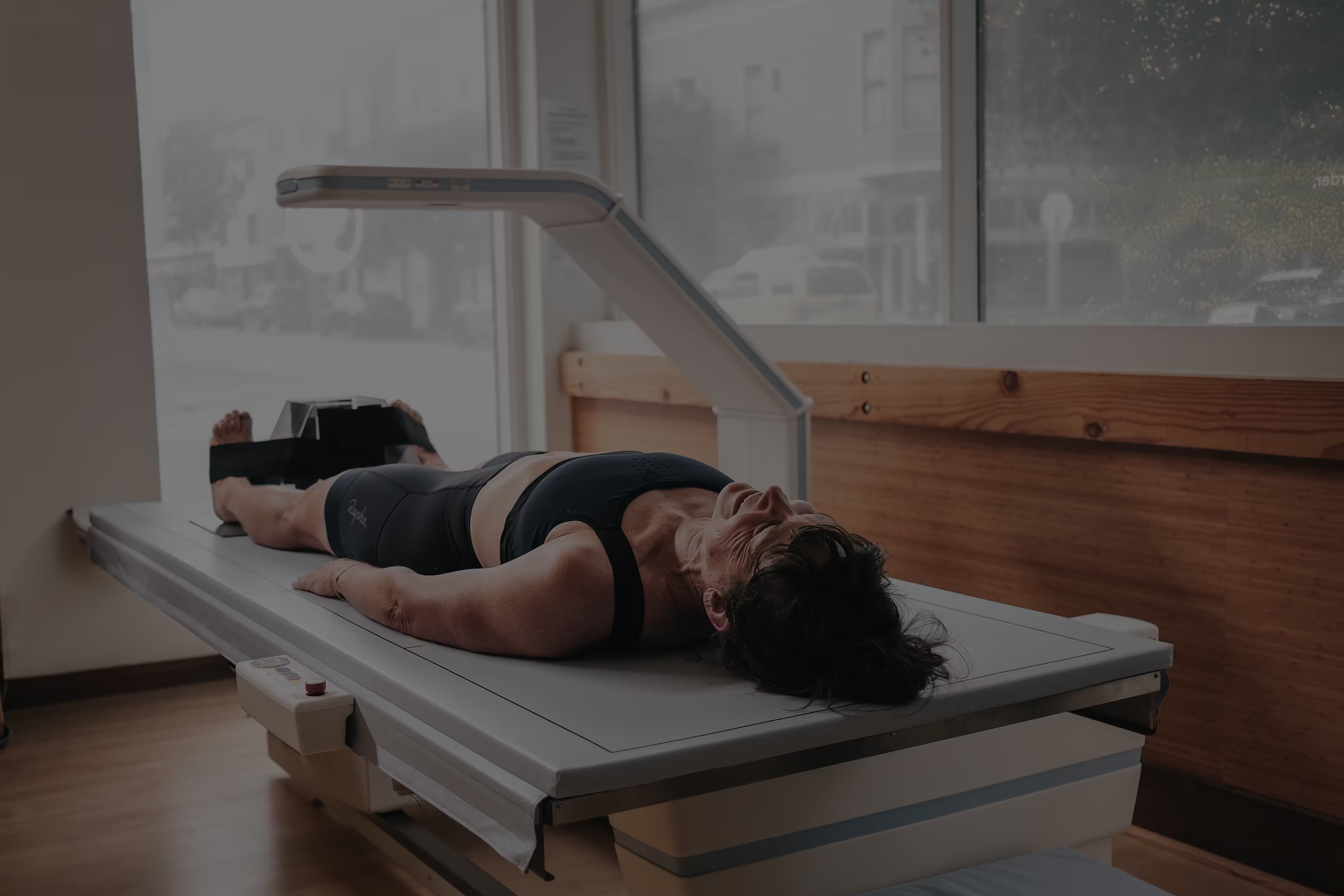
That’s why body-composition tools like DEXA scans, along with strength and performance markers, are used in sports and clinical settings to monitor weight loss safely.

Most online GLP-1 programs don’t measure any of this.

Appetite suppression changes the game

Many people on GLP-1s simply aren’t hungry enough to eat what their body needs, especially protein.

Evidence-based protocols for muscle preservation during weight loss typically include:

  • High protein intake (often near ~1 g/lb bodyweight)
  • Regular resistance training
  • Even protein distribution across the day

Without these, fatigue, strength loss, mood changes, and stalled progress are common.

Common Questions

I’m losing weight, but I feel weaker. Is that normal?
It’s common, but it’s a signal worth paying attention to. Declining strength can indicate under-fueling or lean mass loss, even if the scale is moving.

Can I just do cardio?
Cardio alone does not preserve muscle. Resistance training is the primary protective stimulus for lean mass during weight loss.

Do GLP-1s affect mood or motivation?
They can. Appetite suppression, rapid body changes, and under-fueling may contribute to mood changes in some individuals, which is why mental health screening and follow-up matter.

What are some other key risks?
With muscle loss comes a decline in strength, this must be monitored alongside body composition.

Additionally, micronutrient balance is often put at risk with decreased eating and should be measured frequently.

What a Proven Protocol Actually Looks Like

$250 / Month
Medication not included
Have a Prescription to GLP-1?
Curious about starting?
Join NowBook a CONSULTATION
Have a Prescription to GLP-1?
Join Now
Curious about starting?
Book a CONSULTATION
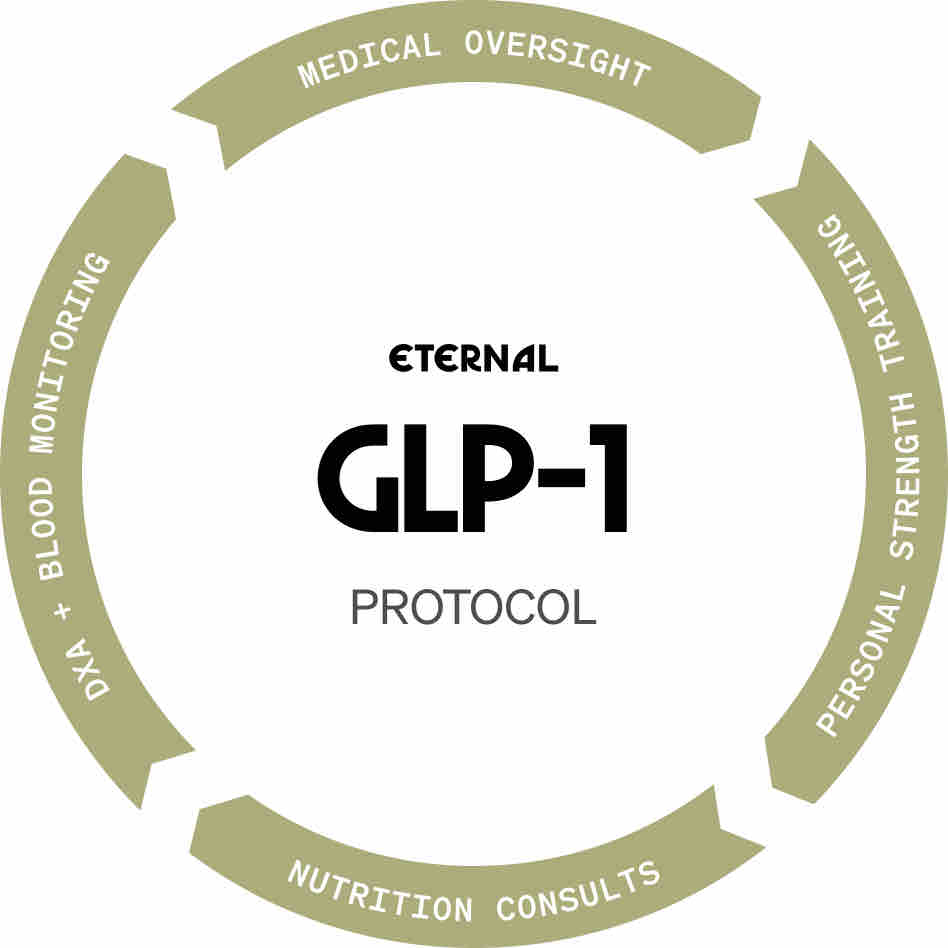
Medical oversight
  • Dedicated clinician available for telehealth consults
  • Prescription and dose management (GLP-1 prescription only available to those medically eligible)
  • Expert-designed, clinician-led: developed by Eternal’s leaders in obesity medicine, exercise physiology, women’s health and endocrinology, and nutrition to support health, performance, and long-term outcomes—not just the scale.
Strength Training Plan
  • Personalized for you based on experience, time constraints, and availability of equipment
  • Tracked along with care team
  • Adapted as necessary
Monthly (1x per month) In-person Personal Training
  • Accountability built in to the program
  • In-person training done in SF and NYC
  • Eternal trainers communicate regularly with the rest of your care team
  • Virtual training available as an alternative
Monthly DEXA scans and strength tests
  • Key for monitoring effects of weight loss
  • Testing conducted in SF and NYC
Regular blood labs
  • Before, during, after labs on key biomarkers related to weight loss
  • Additional labs as needed

How it works

2.5 hours, hundreds of insights, twice per year and tracked over time.

01

Mobility & Stability

After a dynamic warmup we’ll use functional movement and balance tests to measure your range and quality of motion as well as your core stability and muscle control.

02

Strength & Power

Next, we measure your ability to produce force and how quickly you can apply it. We use force plates and targeted exercises to identify imbalances and guide your training.

03

Aerobic Function

To identify your aerobic and anaerobic thresholds, you’ll do a Lactate Ramp test. You’ll move through stages on a treadmill or bike, with a quick finger prick after each.

04

Aerobic Capacity

Finally you’ll roll right into your VO2 max test, which measures your aerobic capacity (VO₂ max) or how efficiently your body uses oxygen during intense exercise.

01

Consult with our team on the proper plan

After a dynamic warmup we’ll use functional movement and balance tests to measure your range and quality of motion as well as your core stability and muscle control.

02

Strength & Power

Next, we measure your ability to produce force and how quickly you can apply it. We use force plates and targeted exercises to identify imbalances and guide your training.

03

Aerobic Function

To identify your aerobic and anaerobic thresholds, you’ll do a Lactate Ramp test. You’ll move through stages on a treadmill or bike, with a quick finger prick after each.

04

Aerobic Capacity

Finally you’ll roll right into your VO2 max test, which measures your aerobic capacity (VO₂ max) or how efficiently your body uses oxygen during intense exercise.

The eternal difference

San Francisco's most inspiring doctor's office

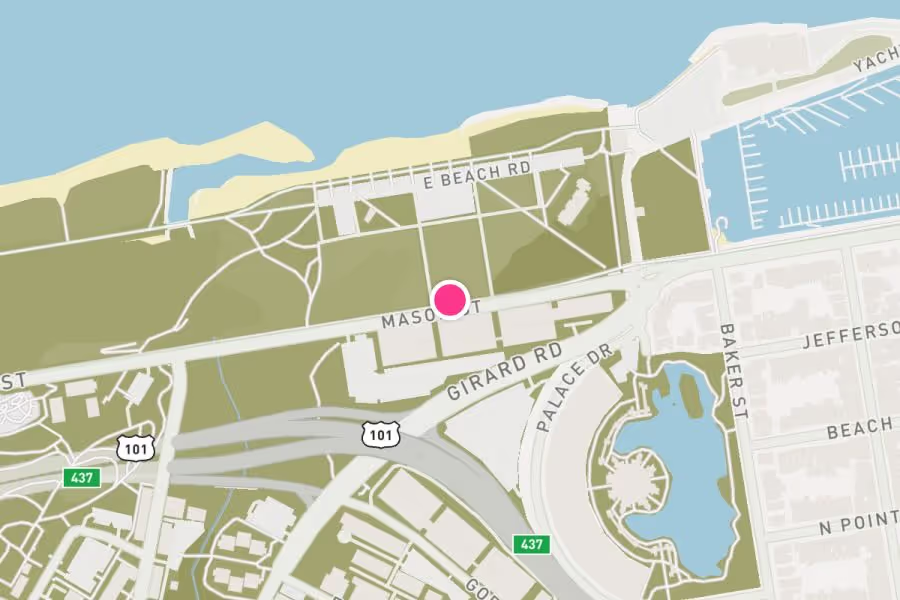
Located in at the base of the Golden Gate Bridge in The Presidio with ample parking, our San Francisco performance center is where you'll want to put in the work.

1183 Old Mason Street, San Francisco, CA 94123

Keep the progress. Keep the muscle. Feel better doing it.

A plan built around your goals, so results improve how you move, feel, and perform.

Have a Prescription to GLP-1?
Curious about starting?
Join NowBook a CONSULTATION